
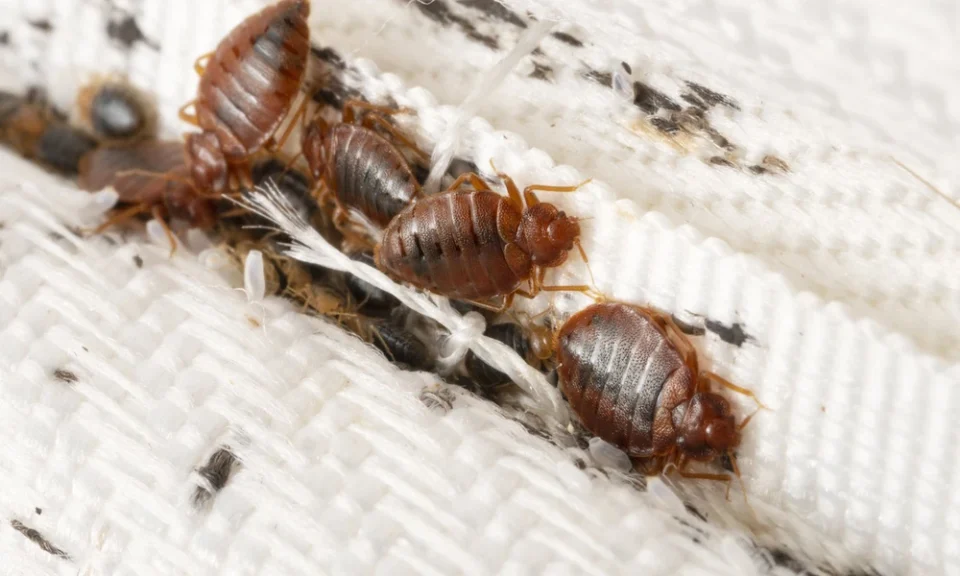
Spring cleaning is the one week a year most people pull the bed away from the wall, empty the closet, and turn over the couch cushions. That makes it the single best detection window on the calendar, and it is why crews running Hot Bugz heat equipment field a wave of calls every April from homeowners who found something odd behind a headboard. Cleaning done carelessly can also scatter an infestation across a house in an afternoon, so the order of operations matters as much as the effort.
Why is spring cleaning the best time to find bed bugs?
Because detection depends on looking in places nobody looks the rest of the year, and deep cleaning takes you there anyway. Bed bugs spend the vast majority of their lives hidden in seams, joints, and voids, feeding perhaps once a week, so an infestation stays invisible until someone deliberately inspects.
Timing helps too. Spring falls before the summer travel season that brings most new introductions into Denver homes, and it is the cheapest stretch of the year to deal with a problem. An infestation caught in April is usually confined to one room. The same infestation found in August has had a female laying one to five eggs a day, with eggs hatching in six to ten days and nymphs reaching adulthood in roughly five to seven weeks.
Where should you actually look while you clean?
Start at the bed and work outward, because that is where the population concentrates. Give yourself a flashlight and hold it at a low angle so shells and eggs catch the light.
- Mattress piping and the four corners of the box spring, including the underside of the fabric
- The gap where a headboard meets the wall, and any screw holes in a wooden frame
- Sofa and recliner seams, especially the underside of removable cushions
- The sofa bed mechanism, which almost nobody opens
- Nightstand drawer runners and the joint where a drawer bottom meets its sides
- Behind loose baseboard, wall outlet plates, and picture frames near the bed
You are looking for three things. Dark fecal spotting shows up as pen-tip dots that bleed into fabric like ink from a felt marker. Shed skins are translucent amber husks shaped like the insect, and they persist for months. Live adults are 4 to 5 millimeters long, reddish brown, and shaped like a flattened apple seed.
How do you vacuum without spreading them?
Use the crevice tool, avoid brush attachments, and seal the contents immediately. Bed bugs survive being vacuumed and will walk back out of a canister or a bag left sitting in the closet.
Run the crevice tool slowly along seams and joints rather than sweeping across surfaces. When you finish, remove the bag, seal it in plastic, and put it in an outdoor bin. With a bagless vacuum, empty the canister directly into a sealed bag outside and then wash the canister with hot soapy water. Brush attachments are worth skipping because bristles can carry eggs from one room to the next.
Does washing bedding actually kill them?
The dryer does the work, not the wash. Thirty minutes on high heat kills bed bugs at every life stage, including eggs, which is why laundering is genuinely effective when done that way.
Carry linens to the laundry room inside a sealed bag rather than an open basket, and do not shake anything out on the way. Wash the bag or discard it after the load goes in. Curtains, throw pillow covers, and slipcovers all belong in the same cycle, and items that cannot take a hot dryer can go to a dry cleaner as long as you tell them what you suspect.
Can spring cleaning make an infestation worse?
Yes, and this is the mistake people make most often. Moving an infested item to another room to clean it, or relocating a mattress to the basement while you sort things out, converts one problem area into two.
Decluttering has the same trap. Bagging up belongings and storing them preserves whatever is inside, since adult bed bugs can survive months without feeding. If you are boxing winter clothing for storage, run everything through a hot dryer first and use sealed hard-sided bins rather than cardboard or fabric bags. Spring is also the garage sale and thrift season across Denver, and secondhand furniture is the most preventable way an infestation enters a home. Inspect any used piece outdoors, seams first, before it crosses the threshold.
What should you do if you find something, and when is it time to call?
Stop cleaning and stop moving things. Photograph what you found with the location visible in the frame, because an identification is far easier from a photo of a husk on a box spring corner than from a description over email.
Place interceptor cups under the bed legs, which cost roughly $20 to $30 for a set of four and passively catch bugs traveling to and from the bed. Then get a professional inspection rather than reaching for a fogger, since research by Susan Jones at Ohio State University published in the Journal of Economic Entomology found total release foggers produced little to no meaningful mortality against bed bugs. Heat treatment in the Denver market generally runs $500 to $1,500 for a single room and $1,200 to $4,000 for a whole home, and monitored thermal work resolves in one day rather than the four to six weeks a repeat spray program requires.
Deep cleaning is worth doing, and it is worth doing in the right sequence: inspect first, vacuum with a crevice tool, seal what you collect, run linens hot, and resist the urge to relocate furniture. If the flashlight turns up dark spotting or an amber husk this spring, book a Hot Bugz inspection while the problem is still one room and still cheap.
