
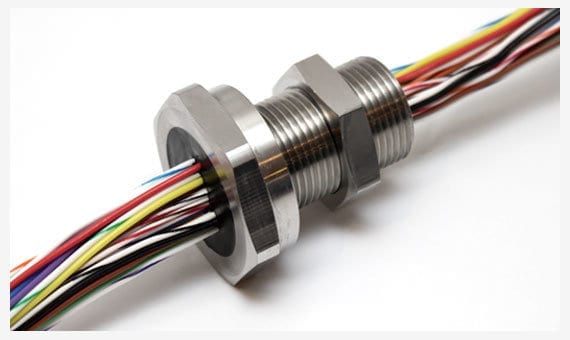
Selecting the right hermetic feedthrough can make or break the performance of your system. Whether you’re working on a sensitive vacuum application, aerospace electronics, or high‑reliability instrumentation, understanding how to choose the best feedthrough ensures long‑term performance and safety. In this guide, we’ll walk through the core considerations and highlight how PAVE Technology offers trusted hermetic feedthrough solutions for a wide range of projects.
What is a Hermetic Feedthrough?
A hermetic feedthrough is a sealed interface that allows electrical, optical, or fluid connections to pass through a barrier while maintaining an airtight or vacuum‑tight enclosure. The purpose is to preserve internal environmental conditions—such as pressure, moisture level, or purity—without compromising conductivity or signal integrity. This makes hermetic feedthroughs essential in advanced electronics, aerospace systems, and industrial machinery.
PAVE Technology supplies hermetic feedthroughs designed to meet rigorous sealing standards, ensuring reliable performance in even the harshest environments.
Key Factors to Consider Before Choosing
1. Type of Signals or Media
The first step in choosing the right hermetic feedthrough is understanding what you need to transmit through the sealed barrier:
- Electrical signals: Choose single‑pin or multi‑pin electrical feedthroughs.
- High‑frequency signals: Specialized feedthroughs with controlled impedance.
- Fluids or gases: Fluidic hermetic feedthroughs designed for controlled pressure and flow.
PAVE Technology offers a variety of feedthroughs tailored to different signal and media requirements, allowing designers to match product performance to application needs.
2. Environmental Conditions
Different projects impose different environmental challenges. Consider:
- Temperature extremes: High‑temperature materials like ceramic or metal feedthroughs may be needed.
- Pressure differences: Vacuum or high‑pressure systems require strong sealing integrity.
- Vibration and mechanical stress: Applications like aerospace need durable designs that resist fatigue.
With decades of engineering expertise, PAVE Technology provides hermetic feedthroughs that perform reliably in demanding conditions, from deep vacuum chambers to high‑altitude environments.
3. Material and Construction
The materials used in a hermetic feedthrough determine its durability and performance:
- Glass‑to‑metal seals: Excellent for high vacuum and robust sealing.
- Ceramic feedthroughs: Provide strong insulation and thermal stability.
- Metal housings: Offer mechanical strength and corrosion resistance.
PAVE Technology engineers feedthroughs using industry‑proven materials that balance electrical performance with sealing integrity.
Common Types of Hermetic Feedthroughs
Understanding the common classes of hermetic feedthroughs can help you select the right one:
- Single‑pin feedthroughs: Ideal for simple power or signal lines.
- Multi‑pin feedthroughs: Support many connections within a single sealed interface.
- Coaxial and RF feedthroughs: Designed for high‑frequency signal integrity.
- Fluidic feedthroughs: Allow passage of gases or liquids while maintaining seal.
PAVE Technology offers all these types, enabling engineers to find the exact solution for their design requirements.
Practical Tips for Selection
When choosing a hermetic feedthrough for your project, remember:
- Match the feedthrough rating to your system’s voltage and current requirements.
- Check mechanical compatibility with your enclosure or housing.
- Ensure certifications and testing align with your industry standards.
- Factor in long‑term reliability under expected operating conditions.
With a strong reputation for quality and engineering support, PAVE Technology helps customers evaluate and select hermetic feedthroughs that meet both current needs and future scalability.
Conclusion
Choosing the right hermetic feedthrough involves more than just picking a component—it requires understanding your system’s needs, environmental stresses, and performance goals. By considering factors such as signal type, material, environmental conditions, and industry standards, you can make an informed decision that enhances reliability and longevity.
