
Key Takeaways
- Singapore’s warm, humid climate allows mosquitoes to breed all year round.
- Eliminating stagnant water is the first and most important step in mosquito control.
- Regular inspections and community efforts reduce dengue risk significantly.
- Professional services offer targeted solutions when home measures are not enough.
Introduction
Singapore’s tropical weather has its perks. Lush greenery, evening strolls without a jacket, and gardens that bloom almost all year. But the same warmth and humidity that keep plants thriving also create ideal conditions for mosquitoes, and once they settle in, they do not leave quietly.
Effective mosquito control in Singapore requires more than a quick spray before bedtime. It calls for consistency, awareness, and sometimes professional intervention. With dengue cases rising during wetter months, the issue becomes more than a mild nuisance. It becomes a public health concern.
So what actually works in our climate, and how can households stay one step ahead?
Why Singapore’s Climate Favours Mosquitoes
Mosquitoes thrive in warm, damp environments, and Singapore offers both, often in abundance. Short bursts of rain fill plant trays, clogged gutters, and even bottle caps with water. Within days, larvae develop; the lifecycle is fast, and that speed is what makes control challenging.
Urban density adds another layer. In high-rise estates, water can collect in rooftop gutters, corridor drains, and even lift shafts if maintenance slips. A single overlooked puddle becomes a breeding site, and it sounds dramatic, but it is surprisingly ordinary.
That is why mosquito control in Singapore often begins with awareness. Residents are encouraged to practise the “five-step Mozzie Wipeout” promoted by the National Environment Agency. Simple checks are done weekly and repeated often.
The Basics Still Matter
It may sound obvious, but prevention at home is still the strongest defence.
Clearing stagnant water from flowerpot plates, changing the water in vases every other day, and keeping pails covered may feel repetitive or even tedious, but these small routines are surprisingly powerful. Mosquito control in Singapore depends heavily on such consistent, everyday habits.
Physical barriers also play an important role in keeping mosquitoes at bay. Installing window screens, fitting proper door seals, and even using ceiling fans can help, as strong airflow makes it harder for mosquitoes to land. Some households turn to electric vapourisers or coils in the evening to reduce bites, but while these measures offer added protection, they do not eliminate breeding sources. They should therefore complement, not replace, proper housekeeping practices.
The situation is similar to cleaning a kitchen. Spraying air freshener may mask an odour, but it does not remove the crumbs; the crumbs themselves still need to be cleared away.
Landscaping, Drains, And The Hidden Spots
Many mosquito problems begin outdoors, particularly in condominiums with lush landscaping or landed homes surrounded by gardens. Thick shrubs tend to trap moisture, while decorative ponds can quickly turn stagnant without proper circulation, creating ideal breeding conditions.
Regular drain checks are therefore essential. Leaves and debris should be cleared promptly so that rainwater flows freely instead of collecting in hidden pockets. Although town councils may conduct inspections in some estates, private properties rely heavily on homeowner vigilance. It is often the overlooked areas that pose the greatest risk, such as the side drain behind the air conditioner compressor or the damp corner near the bin chute. These forgotten spots can quietly become breeding grounds if left unattended.
For businesses and larger premises, routine inspections are typically managed by the best pest control providers in Singapore. They assess potential risk areas, apply larvicides where necessary, and document their findings to ensure regulatory compliance. The approach is systematic and thorough, as it must be in commercial environments where standards and accountability are especially important.
When Home Efforts Are Not Enough
Sometimes, despite careful maintenance, mosquitoes persist. This could indicate nearby breeding sites beyond one’s control, such as construction areas or vacant units.
In such cases, engaging the best pest control in Singapore becomes a practical step. Professional teams use targeted fogging, misting, and residual treatments that reduce adult mosquito populations. More importantly, they conduct site assessments to locate hidden breeding areas.
It is important to recognise that fogging alone is not a magic solution. While it effectively eliminates adult mosquitoes, it does not target larvae or prevent future breeding. Sustainable mosquito control in Singapore depends on an integrated approach that combines thorough inspections, consistent source reduction, targeted chemical treatment when necessary, and regular follow-up checks. Rather than relying on one dramatic action, it works best as a layered defence, with each measure reinforcing the others.
Community Effort Makes A Difference
Mosquitoes do not recognise property boundaries, which means that what occurs in one unit can easily affect neighbouring homes. For this reason, community cooperation plays a crucial role in effective prevention and control.
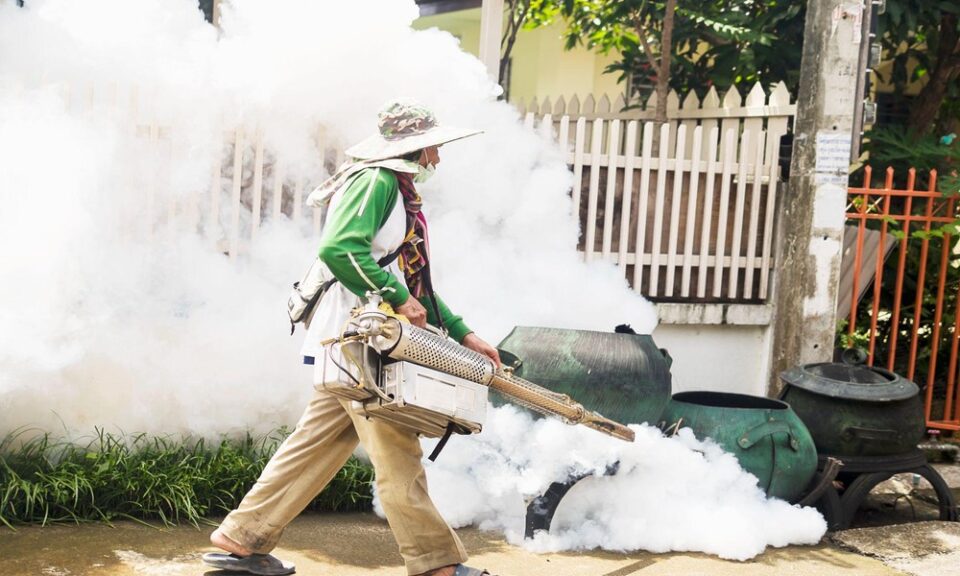
During dengue clusters, residents may notice thermal fogging in common areas. NEA officers conduct checks and issue notices when breeding sites are found. While it can feel inconvenient, these measures protect entire neighbourhoods.
Simple acts, like reminding a neighbour to empty a tray or reporting clogged drains, help more than most realise. Mosquito control in Singapore is, in many ways, a shared responsibility.
Staying Alert During Peak Seasons
Although mosquitoes remain active throughout the year, case numbers often increase during wetter months, making extra vigilance especially worthwhile during these periods. Inspections should be carried out more frequently, and areas should be checked carefully after heavy rain, when water is more likely to collect unnoticed.
It can be tempting to relax once mosquito numbers begin to fall, but consistency is essential. Their lifecycle is short, and even a brief lapse in maintenance can undo weeks of careful effort. Repeating checks regularly is not excessive; it is simply a sensible and preventive habit.
For property managers, scheduling regular engagements with the best pest control in Singapore helps ensure that preventive treatments remain on track. The process is structured, properly documented, and provides reassurance that risks are being managed systematically.
Conclusion
Singapore’s climate is not going to change anytime soon. Warm air, sudden showers, and dense urban living are part of daily life. Mosquitoes will continue to thrive unless deliberate steps are taken to limit them.
Effective mosquito control in Singapore starts with small, regular actions at home and extends to community cooperation and professional support when necessary. It is a balance of routine housekeeping and targeted intervention. Neither extreme works alone.
For lasting protection and peace of mind, consider partnering with the best pest control in Singapore to assess your property and implement a comprehensive control plan. Get in touch with Rentokil Singapore to safeguard your home or business from persistent mosquito threats.
