
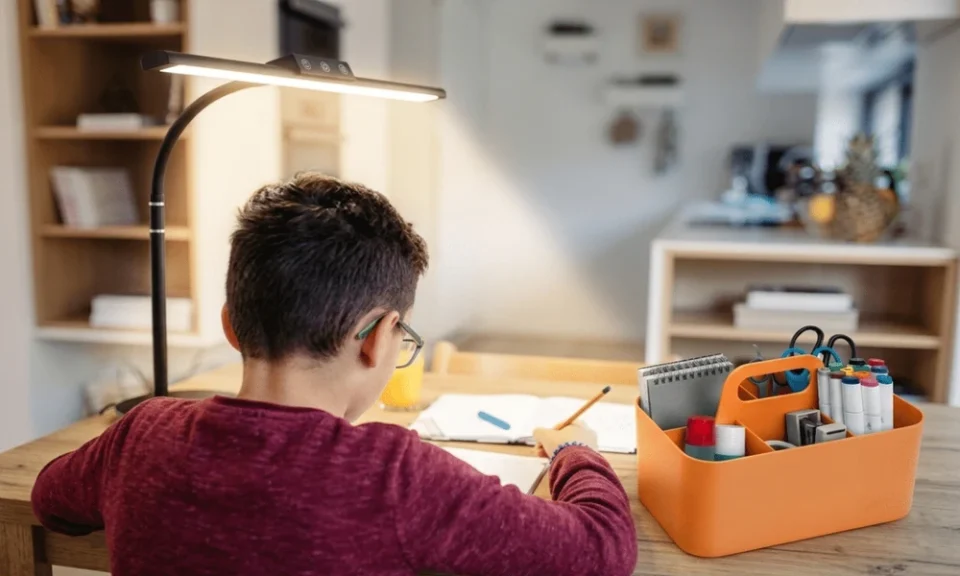
Every parent has bought into the idea of a dedicated homework space at some point, and a lot of those spaces end up gathering dust while homework happens at the kitchen counter instead. The gap between a Pinterest-worthy study nook and a space kids will actually use night after night usually comes down to a few practical details that get overlooked in favor of aesthetics. Here’s how to build a homework station that survives contact with an actual kid’s daily routine.
Start With Location, Not Furniture
The biggest mistake parents make when setting up a homework station is choosing the furniture before choosing the location. A beautifully designed desk tucked away in a quiet bedroom often gets ignored in favor of the kitchen table, simply because kids – especially younger ones – tend to want to do homework near where the rest of the family is, not isolated in another room. Common areas with some visibility from the kitchen or living room tend to see far more consistent use than a study space set up purely for quiet focus in an unused corner of the house.
Right-Sized Furniture Matters More Than Style
A desk and chair that don’t actually fit a kid’s body will get abandoned quickly, regardless of how nice they look. Look for adjustable-height chairs, or furniture appropriately scaled to your child’s current age and size rather than furniture bought to “grow into” for years. Proper ergonomics – feet flat on the floor, desk height allowing comfortable arm positioning – genuinely affects how long a kid can comfortably focus, which directly impacts whether they associate the space with getting things done or with discomfort worth avoiding.
Durability Should Be a Real Consideration, Not an Afterthought
Homework stations take more abuse than people expect: pencil marks, spilled glue from school projects, backpacks dropped directly onto desk surfaces, and the occasional frustrated kid pushing back a chair a little too hard. Choosing desks with sealed, scratch-resistant finishes and sturdy frame construction – the same durability considerations that matter for dining tables and other high-use family furniture – pays off considerably over a homework station’s lifespan, especially with younger kids who haven’t yet developed careful furniture habits.
Storage Solves More Problems Than People Realize
A homework station without adequate storage tends to become cluttered fast, and clutter is one of the biggest reasons kids abandon a dedicated study space in favor of a clear kitchen table. Built-in drawers, shelving, or a nearby storage cart for supplies keep the workspace usable day to day, rather than requiring a full cleanup before every use. For younger kids especially, having designated, easy-to-reach storage for specific supplies (a drawer for pencils, a shelf for books) reduces the friction of actually sitting down to start.
Lighting Is an Easy Detail to Get Wrong
Poor lighting is one of the most common, and most fixable, reasons kids avoid a homework space. A dim corner, even with a nice desk, discourages sustained focus and contributes to eye strain during longer study sessions. A dedicated desk lamp, ideally with adjustable brightness, paired with as much natural light as the location allows, makes a noticeable difference in how comfortable a space feels to actually sit and work in for an extended period.
Minimize Distraction Without Isolating the Space
There’s a balance to strike between a homework station that’s too isolated (and therefore ignored) and one that’s too exposed to distraction. Positioning a desk to face away from a TV, keeping the space separate from a play area, and setting clear expectations around devices during homework time all help maintain focus without requiring a kid to be completely removed from the rest of the household’s activity.
Furniture That Can Adapt as Kids Get Older
A homework station’s needs change significantly between early elementary school and middle or high school, and furniture that can adapt to that shift – an adjustable desk, modular shelving, a chair that can be swapped as a child grows – tends to offer far better long-term value than furniture bought for a specific age that gets outgrown within a couple of years.
Because homework furniture needs to hold up to years of genuine daily use, it’s worth checking how specific desks and storage pieces have actually performed for other families before buying. Looking through Coleman furniture reviews can offer a clearer, more grounded sense of real-world durability than a product description alone.
A Space Kids Actually Choose to Use
The most successful homework stations aren’t necessarily the most elaborate – they’re the ones built around where kids naturally want to be, sized appropriately for their current age, and durable enough to handle real daily use without falling apart within a year. For guidance on organizing school supplies and setting up functional study routines beyond the furniture itself, parenting and organization resources focused on kids’ study habits offer practical tips that pair well with the right physical setup.
Getting the space right isn’t about creating something that photographs well – it’s about removing enough friction that a kid actually sits down and uses it, night after night, without a fight.
