
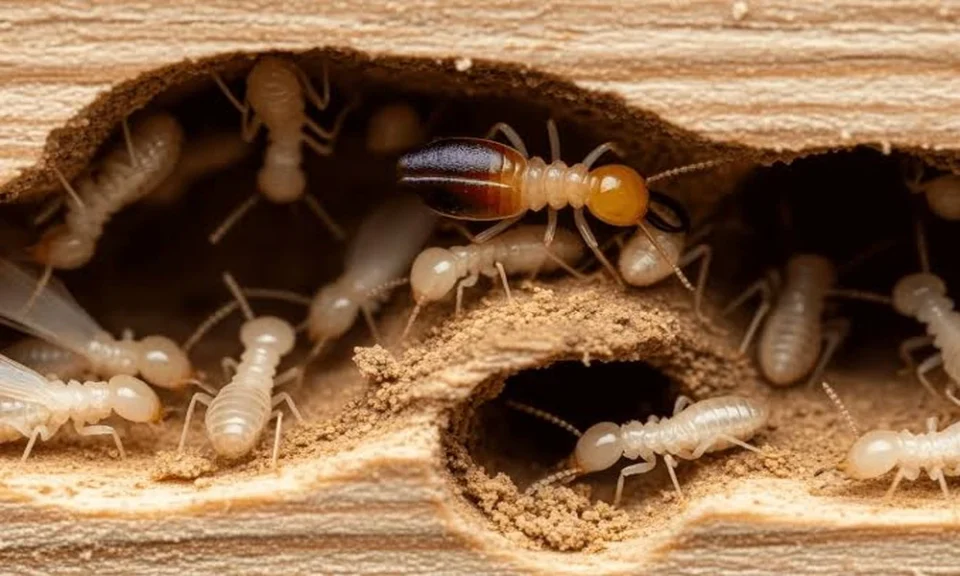
Termites don’t pick houses at random. They go where moisture, wood and soil meet, and most homes create those conditions without the owner realizing it. Zip Zap Pest, a Lawson company led by a Board-Certified Entomologist, finds the same conditions again and again on inspections across the Northland. Here are ten of them, along with five local companies that handle termite work.
Almost all termite activity in this area comes from eastern subterranean termites, which University of Missouri Extension identifies as the most common species in Missouri. These termites live underground and dry out quickly in open air, so they depend on damp soil and hidden routes into a home.
What attracts termites to a house?
1. Do clogged gutters attract termites?
Yes. Overflowing gutters and short downspouts soak the soil right against the foundation, which is exactly where termites forage. Extend downspouts so water drains several feet away from the house. The International Residential Code calls for ground to slope away from the foundation at least 6 inches over the first 10 feet.
2. Why is wood touching the ground a problem?
Wood in direct contact with soil gives termites a hidden route into your house. Common culprits include deck posts set in dirt, wooden steps, trellises and siding that runs too close to the ground. The IRC requires wood siding within 6 inches of exposed ground to be treated or naturally rot-resistant.
3. Is mulch bad for termite prevention?
Mulch doesn’t draw termites in by itself, but thick mulch piled against the foundation holds moisture and hides activity. Keep beds a few inches below the siding line and leave a strip of bare ground or gravel next to the foundation.
4. Should firewood be stored away from the house?
Yes. Firewood, scrap lumber and old pallets stacked against the house give termites a food source right beside your walls. Many university extension services recommend storing firewood at least 20 feet from the home and raised off the ground.
5. Can plumbing leaks attract termites?
Leaks create the damp wood termites prefer. Slow drips under sinks, a leaking water heater, and an air conditioner condensate line that empties next to the foundation are common sources. So are outdoor spigots that drip all summer. Fixing the leak removes much of the appeal.
6. Why are crawl spaces so vulnerable?
Crawl spaces combine bare soil, humidity and wood framing in one dark space. A missing or torn vapor barrier, poor ventilation or standing water after heavy rain can make conditions ideal for termites. A plastic vapor barrier covering the soil reduces moisture significantly.
7. Do old tree stumps attract termites?
Stumps, buried roots and wood debris left in the ground can support termite colonies near your home. New construction sometimes has scrap lumber buried in the backfill around the foundation. That’s a known issue in fast-growing Northland subdivisions.
8. Can termites get in through foundation cracks?
Termites fit through gaps thinner than a credit card. Settlement cracks, slab expansion joints and openings where plumbing or utility lines pass through concrete all give them a way inside without exposure to open air. Sealing visible cracks helps, but it won’t block every route.
9. Do shrubs next to the house make termites worse?
Dense shrubs, ivy and vines against the siding hold moisture and block sunlight, and they hide mud tubes from view. Trim plants back so there’s airflow between the plants and the house. That also makes it easier for you or an inspector to see the foundation.
10. Does a lapsed termite treatment matter?
Yes. Liquid termiticide treatments break down in soil over time, and bait systems only protect a home while someone services them. A home treated years ago with no follow-up inspections may have little protection left. Most termite warranties require annual inspections to stay active.
Which companies handle termite prevention near Kansas City?
1. Kansas city pest control (ZipZap Termite & Pest Control), Lawson
Zip Zap Pest is a third-generation, family-owned company led by Jeff Preece, a Board-Certified Entomologist. He has more than 40 years in the industry and a Public Health Entomology Certificate, and the company holds QualityPro certification through the National Pest Management Association. Services include termite inspections, treatment, ongoing monitoring and year-round bundle plans covering rodents, ants and other pests. It serves Lawson, Kearney, Liberty, Excelsior Springs, Smithville and rural Northland properties.
2. Terminix
Terminix has a location in north Kansas City and provides pest and termite services.
3. Presto-X Pest Control
Presto-X Pest Control operates a branch in Riverside and offers pest control services.
4. ClearDefense Pest Control
ClearDefense Pest Control has a Kansas City location and provides pest control services.
5. Local Guy Pest Control
Local Guy Pest Control is based in Blue Springs and serves the Kansas City metro.
Making Your Home Less Inviting to Termites
Most of what attracts termites comes down to moisture and wood near the soil. Fixing gutters, moving firewood, pulling mulch back and repairing leaks costs little and removes much of what draws termites in. These steps reduce risk but don’t replace professional protection. If your home hasn’t had a termite inspection in the past year, schedule one before the spring swarm season.
