
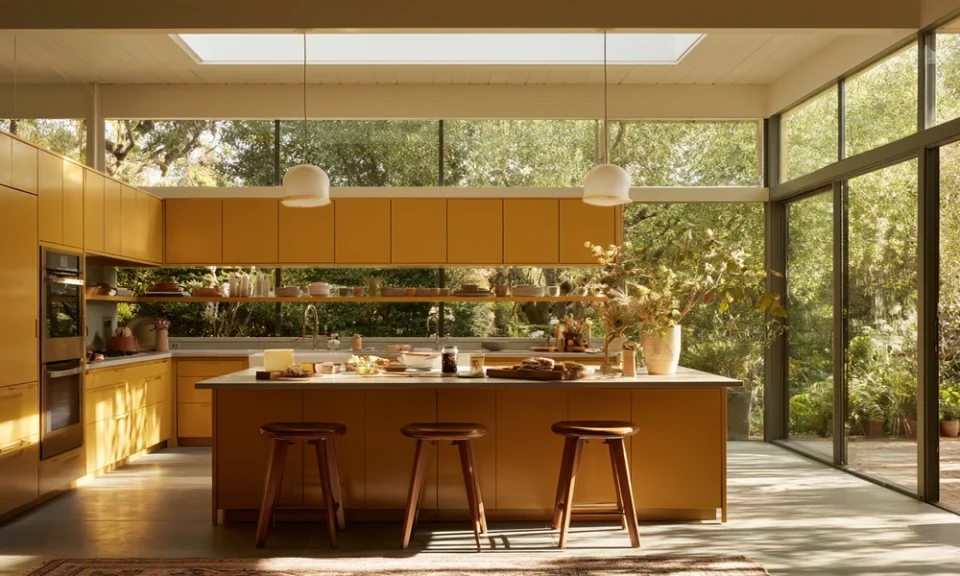
A mid-century kitchen and a brand-new smart refrigerator may sound like an odd pair.
One comes from a design era known for warm wood, simple cabinets, geometric shapes, and bold colors. The other comes with touchscreens, hidden controls, Wi-Fi, and polished metal.
Put them in the same room, and you might expect them to clash.
They don’t have to.
In fact, some of the best mid century modern kitchens combine classic design ideas with appliances built for the way people live today. The kitchen can still have the warmth and character of the 1950s and 1960s without asking you to cook like it is 1962.
The trick is finding the right balance.
Why Mid Century Modern Kitchens Still Feel Fresh
Mid-century modern design became popular during the decades following World War II, especially from the 1940s through the 1960s.
The style focused on practical living.
Homes used cleaner lines, open layouts, natural materials, and furniture that did not feel overly decorated. Designers also experimented with new colors and materials.
Those ideas fit surprisingly well with today’s kitchens.
Look at many modern kitchen trends and you will see familiar features:
- Flat-front cabinets
- Open floor plans
- Natural wood
- Simple hardware
- Functional storage
- Large windows
- Clean shapes
- A mix of neutral and bold colors
That is part of the reason mid century modern kitchens have aged so well. The style came from a desire to make homes simpler and easier to use.
Modern appliances share much of that same goal.
The Biggest Challenge: Appliances Can Look Too New
Picture a kitchen with walnut cabinets, terrazzo flooring, warm pendant lights, and a mustard-yellow backsplash.
Now place a giant stainless steel refrigerator with a glowing digital screen in the middle of it.
Your eye probably goes straight to the refrigerator.
That is the problem.
An appliance can work perfectly in a mid-century-inspired kitchen and still look visually out of place.
The goal is not to hide every sign of modern technology. It is to stop the appliances from becoming the loudest part of the room.
You want people to notice the kitchen first.
The appliances should feel like they belong there.
Stainless Steel Can Work Better Than You Think
Stainless steel sometimes gets treated as the enemy of retro design.
It shouldn’t.
Mid-century homes were built during an age of excitement about technology, manufacturing, and new materials. Metal was hardly unusual.
The difference comes down to how you use it.
A huge wall of stainless steel can make a warm kitchen feel commercial. A few carefully selected stainless appliances can create a nice contrast.
For example, walnut cabinets can soften the cold appearance of a stainless refrigerator or range.
Add warm flooring and a colorful backsplash, and the metal becomes just one part of the design.
Matte and brushed finishes are often easier to blend than highly reflective surfaces.
Panel-Ready Appliances Offer an Easy Solution
If you really don’t want to see a modern refrigerator or dishwasher, panel-ready appliances are worth considering.
These appliances accept cabinet panels on their fronts.
Instead of seeing a refrigerator door, you see the same walnut, oak, or painted finish used on the surrounding cabinets.
The appliance almost disappears.
This approach is especially useful in mid century modern kitchens with strong wood cabinetry. Long stretches of matching cabinet fronts keep the room looking simple and calm.
A panel-ready dishwasher can be even easier to hide because it sits below the countertop.
There is one trade-off.
Panel-ready models can cost more than standard appliances. Custom cabinet panels also add to the project cost.
You don’t need them everywhere. Hiding one large appliance may be enough to improve the whole room.
Choose Appliances With Simple Shapes
Mid-century design loves clean geometry.
Keep that in mind when shopping for appliances.
A refrigerator covered in oversized handles, screens, buttons, and decorative details may fight against the rest of the kitchen.
Simpler designs tend to fit more naturally.
Look for appliances with:
- Straight edges
- Minimal controls
- Simple handles
- Flat surfaces
- Few decorative details
- Quiet finishes
Some modern appliance brands even offer retro-inspired designs with rounded corners and vintage colors.
Those can be fun, but don’t feel forced to buy a full set of retro appliances.
A modern range can sit perfectly well in a mid-century kitchen if the surrounding design gives it context.
Warm Wood Is Your Best Friend
Few materials say mid-century modern as clearly as wood.
Walnut is probably the most recognizable choice. Its rich brown color and visible grain can instantly give cabinets a mid-century character.
Oak, teak-inspired finishes, and other warm woods can work too.
Wood is also one of the easiest ways to balance modern appliances.
Imagine black or stainless appliances surrounded by walnut cabinetry. The wood adds warmth, while the appliance adds a crisp modern edge.
Neither has to dominate.
This combination also prevents the kitchen from turning into a themed recreation of the past.
It feels inspired by mid-century design rather than trapped in it.
Don’t Be Afraid of Color
Original mid-century interiors were not always filled with beige and brown.
They could be surprisingly colorful.
Mustard yellow, avocado green, burnt orange, turquoise, blue, and earthy red all appeared in homes during the era.
You don’t need to use all of them.
One strong color is often enough.
Try a muted green backsplash behind a modern stainless range. Add mustard bar stools beside a walnut island. Paint one section of cabinetry a dusty blue.
Color helps connect new appliances with the older design language.
It also gives the room personality.
A kitchen with walnut cabinets, white countertops, and stainless appliances can look beautiful. Add one period-inspired color and suddenly the mid-century influence becomes much clearer.
Modern Induction Cooktops Can Fit Surprisingly Well
An induction cooktop may seem far removed from mid-century design.
Visually, it can actually be a great fit.
Many induction cooktops are almost completely flat. There are no heavy grates, large burners, or complicated controls sticking out from the surface.
That simplicity works with the clean lines found in mid century modern kitchens.
Pair a black induction surface with a simple countertop and flat-front cabinetry, and it can almost disappear.
You get modern cooking technology without adding much visual clutter.
What About a Smart Refrigerator?
This is where things get harder.
Large screens and glowing displays can quickly pull a kitchen away from its mid-century character.
If smart features matter to you, look for models with subtle technology.
Some refrigerators place controls inside the door rather than across the front. Others use smaller displays that become less noticeable when they are not being used.
Placement matters too.
A refrigerator sitting at the end of a cabinet run may attract less attention than one positioned in the center of the main kitchen wall.
Surrounding it with tall cabinetry can also make it feel more integrated.
You can have smart technology.
It just doesn’t need to announce itself from across the room.
Keep the Range Hood Quiet
Range hoods are another place where modern design can become too dominant.
A giant stainless hood may look impressive, but it can easily overpower mid-century cabinetry.
Consider a simpler option.
A built-in hood can be hidden inside cabinetry. Another option is a clean rectangular hood with very little decoration.
If you want the hood visible, connect it to another element in the room.
A black hood can relate to black cabinet pulls. Stainless steel can match the oven. A painted hood can blend into the wall.
The less isolated it looks, the better it fits.
Lighting Helps Connect the Two Eras
Lighting is one of the easiest places to bring stronger mid-century character into a kitchen.
Globe pendants are an obvious choice.
So are cone-shaped fixtures, simple brass lights, and sculptural designs inspired by the Space Age.
You don’t need authentic vintage fixtures.
Modern reproductions can give you the look while supporting today’s electrical and energy standards.
Good lighting can also shift attention away from appliances.
A beautiful pair of globe pendants above a walnut island may become the visual focus of the room instead of the refrigerator in the corner.
Avoid Turning the Kitchen Into a Time Capsule
There is a fine line between inspiration and imitation.
You probably don’t need vintage appliances, vintage cabinets, vintage flooring, vintage lighting, vintage dishes, and a 1960s wall clock all in the same room.
Too many period details can make a kitchen feel like a movie set.
Choose a few strong mid-century features instead.
For example:
Walnut cabinets + geometric backsplash + globe lighting
That combination already creates a clear design direction.
Your countertops, sink, faucet, oven, and refrigerator can then be more modern.
This gives the kitchen room to breathe.
Modern Storage Makes the Style Better
Old kitchens were designed around different lifestyles.
Families owned different appliances. Pantry habits were different. Recycling stations, charging drawers, air fryers, and giant coffee machines were not part of the plan.
There is no reason to copy those limitations.
Modern storage can sit behind mid-century-style cabinet doors.
You can add deep drawers for cookware, pull-out pantry storage, hidden trash bins, appliance garages, charging stations, and drawer organizers.
From the outside, the kitchen still looks simple.
Open a cabinet and it works like a kitchen designed today.
That is a good example of old and new working together instead of competing.
Countertops Can Bridge the Gap
Countertops take up a lot of visual space, so they can help connect different design elements.
White quartz is a popular modern choice. It can work well with walnut cabinets and stainless appliances because it keeps the room bright.
Terrazzo offers more personality and has a strong connection to mid-century architecture.
Natural stone can work too, especially when the pattern isn’t extremely dramatic.
Try to think about the kitchen as a whole.
If your cabinets have a strong wood grain and your backsplash uses bold geometric tile, a quieter countertop may provide the balance you need.
If everything else is simple, the countertop can take on more character.
Small Details Make a Big Difference
You don’t need a major renovation to push a kitchen toward mid-century style.
Hardware can change the mood quickly.
Slim brass pulls, simple black handles, and small round knobs can all work.
The same goes for bar stools, clocks, artwork, bowls, and small countertop accessories.
Even the shape of the faucet matters.
A very ornate traditional faucet may feel strange beside flat walnut cabinets. A clean, gently curved design will usually sit more naturally.
These details are small individually.
Together, they tell the story of the room.
So, Can Old and New Really Work Together?
Absolutely.
In fact, trying to make everything historically accurate can miss the point of mid-century modern design.
The original movement was interested in progress. Designers experimented with new manufacturing methods, materials, technology, and ways of living.
Putting modern technology into a well-designed mid-century-inspired kitchen is not necessarily breaking the rules.
It can continue the same idea.
The strongest mid century modern kitchens borrow the warmth, simplicity, shapes, colors, and natural materials of the era while keeping the conveniences people expect today.
Use the induction cooktop.
Install the quiet dishwasher.
Choose the refrigerator that keeps food fresh and sends an alert when the door is open.
Then surround those things with warm wood, thoughtful lighting, simple cabinetry, and a few carefully chosen colors.
Your kitchen doesn’t need to choose between 1960 and 2026.
It can take the best ideas from both.
