
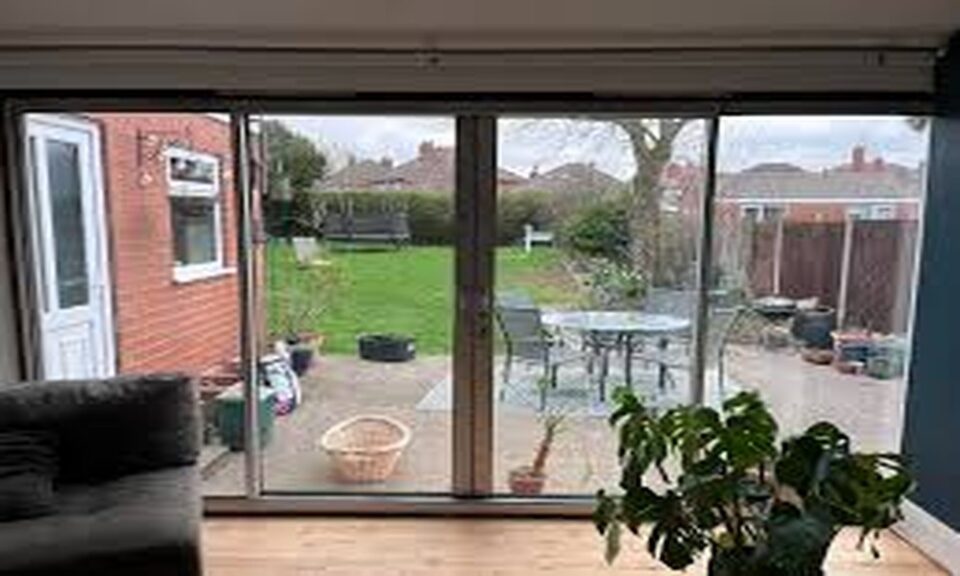
The first properly hot weekend usually triggers it.
Not immediately. Sometimes it takes two or three warm days in a row before the problems start surfacing properly. But every summer across West Yorkshire, there comes a point where bifold doors that felt perfectly fine in spring suddenly begin sticking, dragging or refusing to lock cleanly.
And homeowners always seem surprised by it.
Partly because most people associate door problems with winter. Damp weather. Frozen locks. Condensation. Swollen frames.
But summer creates its own issues entirely.
Especially with modern bifold systems fitted across Leeds, Harrogate and Wetherby over the last decade.
A lot of the large rear extensions built during the open-plan boom are now reaching the age where heat-related movement starts exposing weaknesses in the system. Tracks expand slightly. Rollers wear unevenly. Alignment drifts just enough for locking points to stop lining up properly.
Then somebody tries forcing the handle harder.
Which usually makes things worse.
The amount of demand recently for bifold door repairs across West Yorkshire has definitely shifted seasonally. Winter still causes issues obviously, but hot weather is quietly becoming just as problematic for many homeowners now.
Especially with larger aluminium systems.
Heat Changes How These Doors Behave
People often assume a bifold door is basically static once fitted.
It is not.
The whole system is constantly moving slightly throughout the year. Expansion during warmer periods. Contraction during colder weather. Tiny structural shifts in the surrounding extension. General mechanical wear from daily use.
Most decent installations account for this reasonably well.
Some do not.
One thing I see often during hotter spells is doors becoming noticeably tighter by mid-afternoon after direct sun exposure. Homeowners will say the bifolds operated normally in the morning but became stiff later in the day once the rear of the house heated up properly.
That is not imagined.
Aluminium expands surprisingly noticeably during sustained heat. Even UPVC systems react more than people realise. If tolerances are already tight because of minor alignment drift or wear, summer temperatures can push the system beyond its comfortable operating range.
Then the locking starts catching.
Or the lead door begins scraping slightly against the track.
Or the handles suddenly need far more force to engage.
A lot of homeowners assume something has “broken overnight” when actually the problem has been building gradually for years.
The heat simply exposed it.
Leeds Extensions Are Starting to Show Their Age
Drive around newer parts of Leeds or places like Horsforth and Rothwell and you can almost track the extension boom historically.
Bifold doors everywhere.
Large kitchen knock-throughs. Garden-facing glazing. Wide opening rear walls designed to blur indoor and outdoor space. It became the standard aspirational renovation for years.
Some of those installations are still excellent.
Others are beginning to feel older than homeowners expected.
Particularly where cheaper hardware was used or installation tolerances were rushed originally.
You can usually tell within minutes when a bifold system was fitted slightly out of square years ago. The doors rarely fail immediately. Instead they slowly drift seasonally until one particularly hot summer suddenly turns minor annoyance into obvious malfunction.
This is happening more often lately because many of those extension projects are now seven to twelve years old. Long enough for rollers, hinges and locking mechanisms to accumulate noticeable wear.
And once wear combines with thermal movement, problems accelerate quickly.
The Tracks Are Filthier Than People Realise
One thing nobody talks about enough is how badly tracks suffer during summer.
People associate dirt buildup with winter mud and leaves, but hot dry weather creates different problems entirely. Dust, grit, dried debris and tiny stones compact into sliding surfaces constantly.
Particularly in busy family homes.
Garden-facing bifolds around Wakefield and Pontefract often see heavy traffic throughout summer. Kids in and out constantly. Pets dragging dirt indoors. BBQs. Garden parties. Furniture moving across thresholds.
The tracks take a battering.
Then homeowners wonder why the doors begin feeling rough.
You sometimes inspect systems where the rollers are effectively grinding through compacted debris every single day. Some tracks genuinely resemble sandpaper internally after years without proper cleaning.
The strange thing is many homeowners clean the visible parts obsessively. Glass polished weekly. Frames wiped spotless.
Meanwhile the actual running gear underneath has not been cleaned properly in years.
That is where half the problems start.
People Keep Forcing Misaligned Doors
This is probably the biggest mistake.
A bifold door should not need aggression.
If you are leaning body weight into the handle every evening trying to lock it, something is already wrong mechanically. Yet loads of homeowners continue forcing the system for months because the doors technically still open and close.
Until they suddenly do not.
One thing I see often during summer is dropped lead doors becoming dramatically harder to lock once the frame expands slightly in warmer temperatures. The alignment may only be marginally out during colder months, but heat removes the remaining tolerance completely.
Then the locking points stop engaging.
Homeowners respond by forcing the handle harder.
Eventually internal components fail too.
That is when what could have been a relatively straightforward adjustment becomes much more involved.
Especially if replacement parts are awkward to source.
Some Bifold Systems Were Never Designed For Heavy Daily Use
This is an uncomfortable truth in the industry.
Not every bifold system fitted during the popularity boom was genuinely designed for the kind of constant use many households now expect from them.
Large openings look fantastic on brochures. But mechanically, wider doors place huge strain on rollers, hinges and tracks over time. Particularly in busy homes where the doors are opened repeatedly throughout spring and summer.
Cheaper systems age badly under that kind of use.
You notice it particularly around newer estates in places like Normanton and Featherstone where many homes received similar specification door systems during rapid construction phases.
The wear patterns become repetitive.
Stiff lead doors.
Dragging centre panels.
Locks needing excessive force.
Alignment drifting every few months.
A lot of homeowners understandably think bifold doors are inherently unreliable because so many systems begin developing issues after several years.
Truthfully, some were simply built down to a price point from the beginning.
Harrogate Homes Are Seeing Different Problems
Interestingly, the issues around Harrogate and Wetherby often feel slightly different.
More large aluminium systems. Higher-spec installations generally. Bigger openings too.
The problem there tends to be thermal movement combined with sheer panel weight.
Huge glass doors exposed to direct afternoon sun expand noticeably during hot weather. If the surrounding extension has shifted even fractionally over time, the alignment tolerance disappears quickly.
One thing I hear repeatedly is homeowners saying the doors “only play up when it’s hot”.
Usually true.
Because heat is amplifying an underlying issue already present.
Sometimes it is worn rollers.
Sometimes slight structural movement.
Sometimes hinges drifting over years.
And occasionally just poor original adjustment work.
You can usually diagnose the root cause fairly quickly once you see how the system behaves across the full opening cycle.
Patio Doors Are Quietly Struggling Too
Bifold systems grab attention because the faults feel dramatic. But summer heat affects sliding doors heavily as well.
Particularly older UPVC patio systems around Bradford and Dewsbury.
Tracks expand slightly.
Frames tighten.
Rollers already near failure become much rougher in operation.
Then homeowners start slamming or dragging the doors harder trying to compensate.
One contractor described some neglected patio systems recently as “basically operating on borrowed time”.
Bit brutal maybe.
Not inaccurate though.
A lot of older sliding doors across West Yorkshire are now sitting in that awkward stage where they still technically function but clearly need proper mechanical attention before something gives way completely.
Especially after repeated hot weather cycles.
That is why demand for proper sliding patio door repairs seems to spike every summer now, particularly once temperatures stay high for more than a few consecutive days.
Homeowners Are Delaying Repairs Longer
The economy is definitely affecting behaviour too.
People tolerate problems much longer now before booking repair work. You can feel that shift everywhere.
Years ago homeowners might call somebody once doors became mildly awkward. Now many wait until the bifolds barely lock or the patio door becomes genuinely difficult to move.
Partly because replacement costs scare people.
Partly because everyone is juggling spending priorities.
But delayed repairs nearly always become larger repairs eventually.
A dropped bifold panel left unresolved through multiple summers gradually damages more components around it. Misaligned locks wear internally. Rollers grind unevenly. Tracks suffer additional strain.
By the time somebody finally books repairs, the original problem has often multiplied.
And summer tends to accelerate that process quickly.
The “Maintenance-Free” Label Created Unrealistic Expectations
UPVC and aluminium doors were sold heavily on low-maintenance messaging for years.
Unfortunately many homeowners interpreted that as meaning no maintenance whatsoever.
That was never realistic.
Bifold systems are full of moving mechanical parts. Rollers, hinges, locks, guides, running gear. Anything exposed to weather and constant use eventually needs adjustment or servicing.
Particularly in Yorkshire conditions.
Dust matters.
Moisture matters.
Heat matters too.
A lot of people are genuinely shocked when they discover their expensive bifold doors actually require periodic maintenance to remain smooth long term.
But from years dealing with these systems, the well-maintained ones stand out immediately. They feel lighter. Smoother. Less strained mechanically.
The neglected systems feel heavy before you even fully open them.
Same-Day Callouts Spike During Heatwaves
There is a predictable pattern now every summer.
The first real heatwave arrives and suddenly homeowners across Leeds, Wakefield and surrounding areas discover their bifolds no longer lock correctly.
Usually on Friday evenings for some reason.
A lot of the urgent callouts involve doors stuck partially open because the locking points no longer align once the frame expands in heat. Others involve handles refusing to engage at all after months of increasing stiffness.
And nearly every homeowner says the same thing:
“It was only slightly catching before.”
That slight catching was the warning.
Bifold doors rarely fail dramatically out of nowhere. Most issues build slowly until weather conditions finally expose them properly.
This summer has already started showing the same pattern.
Particularly on systems fitted during the extension surge roughly ten years ago.
Some Doors Are Repairable For Years Yet
This is the important bit people often misunderstand.
Heat-related problems do not automatically mean the doors are finished.
Far from it.
A lot of systems across West Yorkshire still have plenty of life left with proper adjustment work, replacement rollers, alignment correction or UPVC mechanism repairs.
The issue is timing.
Leave problems too long and secondary damage spreads through the system. Tracks wear unevenly. Locks distort. Hinges compensate awkwardly for dropped panels.
That is when repairs become more expensive and sourcing compatible components becomes harder.
You can often tell which homeowners dealt with issues early. Their doors still operate reasonably smoothly despite age. The heavily delayed systems feel rough immediately.
Grinding tracks.
Forced handles.
Dragging corners.
DIY adjustment marks everywhere.
Different world entirely.
And with hotter summers becoming more common across Yorkshire lately, the strain on ageing bifold systems is probably not easing any time soon.
