
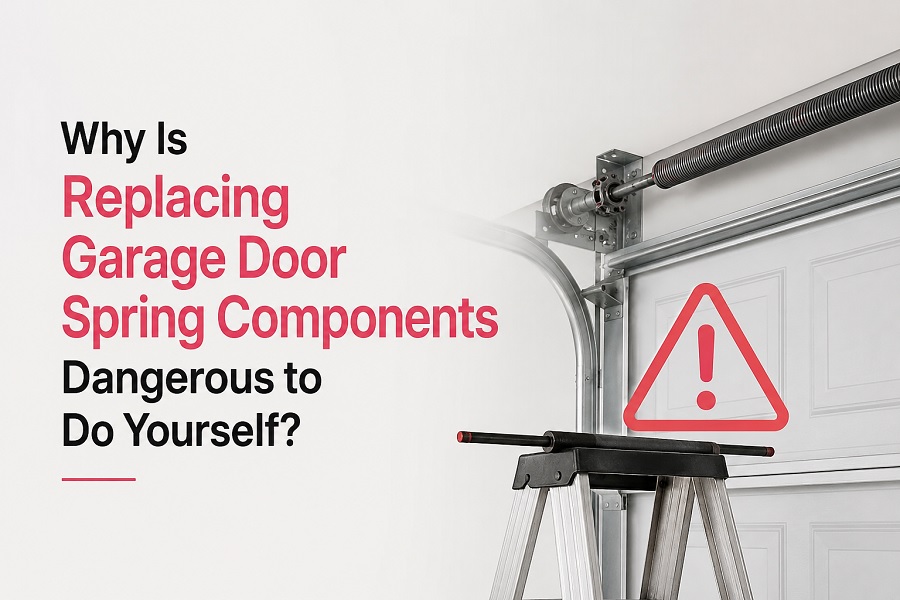
A broken garage door spring can make a straightforward home repair look deceptively simple. Hidden tension inside the spring system can release with enough force to send tools, metal parts, or the spring itself across the garage. Professional service matters because replacing garage door spring components requires accurate measurements, proper tools, and a clear understanding of how the entire door balances.
Garage Door Springs Store More Energy Than They Appear To
Torsion springs sit above the door and twist tightly as the system operates, while extension springs stretch along the horizontal tracks. Both designs store mechanical energy so a heavy garage door can move with far less effort than its actual weight would suggest. Releasing that energy without controlling it can cause sudden movement that leaves little time to react.
Why Can a Winding Bar Become Dangerous So Quickly?
Winding bars allow technicians to add or remove tension from torsion springs in controlled steps. Improvised tools such as screwdrivers, sockets, or undersized rods may slip out of the winding cone because they do not fit the holes properly. Once a tool loses contact, the spring can rotate rapidly and throw the bar or nearby hardware.
Experienced technicians also position their bodies away from the path of moving parts while adjusting spring tension. Proper stance, secure ladders, correctly sized bars, and controlled quarter-turn movements all reduce exposure to an unexpected release. Homeowners searching for a garage door repairman near me are generally safer leaving this work to someone trained to recognize how the spring system will react before any hardware is loosened.
The Wrong Spring Can Damage More Than the Door
Spring selection depends on factors such as door weight, height, track configuration, wire size, inside diameter, and spring length. Installing a spring that is too strong may cause the door to rise aggressively, while an undersized spring can leave the opener lifting more weight than it should. Incorrect balance can shorten the life of cables, rollers, bearings, hinges, and the opener motor.
Broken Cables and Drums Add Another Layer of Risk
Lift cables wrap around drums near the ends of a torsion shaft and carry significant force while the door moves. Frayed cables, damaged drums, or uneven tension can cause one side of the door to rise faster than the other, leaving the panels crooked in the tracks. Releasing spring tension while those parts are already unstable can make the door shift unexpectedly.
Technicians inspect the complete lifting system before replacing garage door spring parts because a broken spring may not be the only problem. Cable wear, loose bearings, bent shafts, worn rollers, and damaged brackets can all affect the repair. Someone searching for an overhead door company near me should look for a provider that checks these connected components rather than installing a spring and assuming the job is finished.
A Heavy Garage Door Can Move Without Warning
Garage doors often weigh hundreds of pounds, yet properly balanced springs make them feel much lighter during normal use. Once a spring breaks or loses tension, that assistance disappears, and the full weight of the door can become much more noticeable. Trying to lift, clamp, or hold the door during a repair can become dangerous if a support slips or another component suddenly moves.
Spring Problems Can Affect the Garage Door Opener Too
Automatic openers are built to guide a balanced garage door rather than lift excessive dead weight. A failing spring can make the motor strain, slow down, stop midway, or reverse because the opener encounters more resistance than expected. Continuing to operate the system after a spring problem appears can damage gears, belts, rails, or other opener components.
Professional garage door opener installation also depends on correct spring balance from the beginning. Installers normally check how the door moves by hand before relying on the motor, because an opener should not compensate for poor mechanical operation. During garage door installation, spring specifications should likewise match the final weight of the panels, insulation, windows, reinforcement, and decorative hardware.
DIY Repairs Can Create Problems That Do Not Show Up Immediately
A garage door may appear to work after a home repair even when spring tension is uneven or the wrong replacement part was installed. Subtle balance problems can cause one cable to carry more load, make rollers wear unevenly, or force the opener to work harder on each cycle. Those issues may develop slowly enough that the original repair seems successful until another component fails.
Professional Spring Service Includes More Than Swapping Parts
Qualified repair work typically involves identifying the spring type, measuring the existing system, checking door weight and balance, examining cables and drums, and testing movement after installation. Correct tension should allow the door to travel smoothly without shooting upward, falling rapidly, or depending on the opener to hold its position. Final checks can also reveal track resistance, worn bearings, damaged hinges, or opener settings that need attention. Snappy Doors provides professional garage door spring replacement with properly matched components, careful installation, and thorough system checks to help restore safe, balanced, and dependable door operation.
