
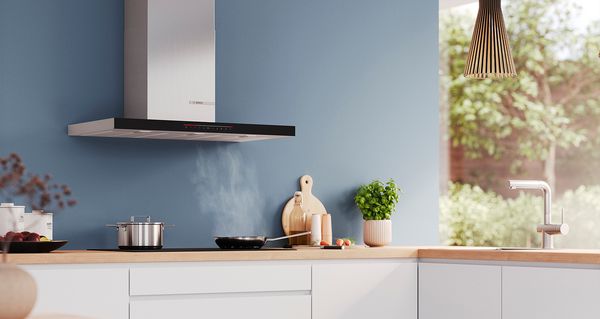
A cooker hood is one of the most hardworking appliances in any kitchen, running every time you cook to manage heat, steam, grease, and odours. Despite this, it is frequently chosen as an afterthought – selected primarily on visual grounds with limited attention paid to the specifications that actually determine how well it will perform day to day. This guide covers the key decisions involved in choosing a hood that will serve your kitchen effectively for years to come.
Ducted or Recirculating Installation
The first and most consequential decision in choosing a cooker hood is whether to install a ducted or recirculating system. Ducted hoods extract air outside the property and deliver the best performance, particularly for high-heat cooking. Recirculating systems clean and return air to the kitchen through carbon filters – a practical solution where external ducting is not feasible but requiring regular filter maintenance to maintain effectiveness.
Extraction Rate
Extraction rate is measured in cubic metres per hour and should be matched to the size of your kitchen and your typical cooking intensity. A commonly used rule of thumb suggests the hood should be capable of cycling the kitchen air volume ten to twelve times per hour. For a standard kitchen of 15 cubic metres, this implies a minimum extraction rate of around 150 to 180 m3/h at working speed – though higher-rated motors provide more headroom for intensive cooking sessions.
Hood Size Relative to Hob
The hood should cover the full width of the cooking surface below it, ideally extending slightly beyond the hob width on each side to improve capture efficiency. A hood narrower than the hob will inevitably allow some vapours to escape at the sides, reducing overall extraction effectiveness regardless of motor power.
Noise Levels
Motor noise is a practical quality-of-life consideration that is easy to overlook during purchase but very noticeable in use. Noise specifications in decibels at different speed settings allow meaningful comparison between models. Premium units from manufacturers like Ciarra One typically incorporate noise reduction engineering that makes a meaningful difference at the medium speeds most frequently used during everyday cooking.
Controls and Features
Modern cooker hoods range from straightforward rotary controls to touch-sensitive panels with automatic speed adjustment based on cooking intensity detection. Timer functions, remote controls, and connectivity features that link the hood to a compatible hob are increasingly available in mid-to-premium product ranges. Consider which features align with your actual cooking routine rather than selecting based on specification lists alone.
