
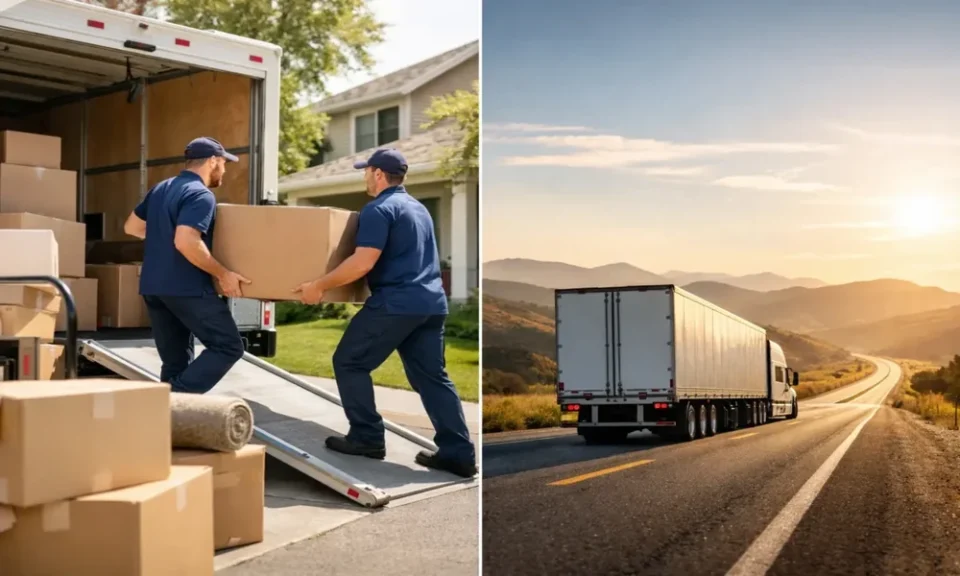
Careful loading determines whether household goods arrive intact after hundreds of miles on the road. Small mistakes inside a trailer can lead to crushed cartons, scratched furniture, broken glass, or shifting cargo during sudden stops. Skilled long distance movers reduce those risks by following a planned loading order and securing each section before the truck leaves.
Why Heavy Items Belong at the Bottom and Toward the Front
Weight distribution begins with appliances, solid wood furniture, toolboxes, and other dense belongings. Crews place these pieces low on the trailer floor, usually near the front axle area, so the truck remains balanced and lighter items do not carry excessive pressure.
Placing heavy property too high raises the load’s center of gravity and makes movement more likely around curves. Experienced Huntsville movers also avoid concentrating too much weight on one side, since uneven loading can affect vehicle handling and place added force on nearby belongings.
Dense cartons require the same care as large furniture. Books, canned goods, records, and hand tools belong beneath lighter boxes, but crews still avoid stacking so much weight that lower cartons buckle during a long trip.
Building Tight Load Sections Prevents Unwanted Movement
Open gaps give furniture and boxes room to slide whenever the truck accelerates, turns, or brakes. Professional long distance moving companies build compact sections, sometimes called tiers, so each group of items supports the pieces around it without placing pressure on fragile surfaces.
Blankets, cushions, and soft bags can fill carefully selected spaces between stable objects. Trained crews never force loose fillers against glass, lamps, artwork, or furniture legs because road vibration may turn even soft material into a source of rubbing or stress.
Finished sections should hold their shape before workers begin the next layer. A dependable long distance moving company checks each tier from floor to ceiling, closes empty areas, and straps the section to anchor rails instead of trusting friction alone.
Furniture Padding Works Best Before Anything Enters the Truck
Protective wrapping should happen inside the home or near the entryway, not after furniture reaches the trailer. Moving pads cover finished wood, upholstery, corners, hardware, and painted surfaces before pieces pass through doorways or travel down stairs.
Stretch wrap can keep blankets in position, although it should not sit directly against certain wood finishes or delicate materials for extended periods. Knowledgeable long distance movers in Huntsville AL choose wrapping materials according to the item rather than using the same method on everything.
Removable parts also need attention before loading begins. Shelves, glass panels, casters, knobs, and table leaves may loosen during transit, so crews often remove, wrap, label, and pack them separately to prevent breakage or loss.
How Do Straps and Anchor Points Keep a Load Stable?
Rated straps connect loaded sections to rails or approved anchor points inside the trailer. Proper tension holds cargo in place without bending furniture, crushing cartons, or cutting into padded surfaces.
Incorrect placement can cause damage even when the strap itself remains secure. Capable long distance movers run restraints across strong structural areas and avoid fragile trim, thin legs, glass panels, drawer fronts, and unsupported edges.
Periodic checks may be needed after the truck has traveled over rough roads or made several stops. A safety-focused long distance moving company in Huntsville AL can inspect accessible restraints at suitable locations and correct any loosening before cargo movement becomes serious.
Fragile Goods Need Their Own Protected Loading Zone
Glassware, mirrors, televisions, artwork, lamps, and electronics should not disappear between heavy furniture pieces. Crews create protected areas where delicate cartons remain upright, visible, and separated from objects that could shift into them.
Clear labels help workers identify orientation, contents, and handling needs, but labeling does not replace sound placement. Reliable long distance movers avoid stacking heavy boxes over fragile containers and keep picture cartons from lying flat beneath other property.
Temperature and moisture can also affect sensitive belongings during interstate transport. Established long distance moving companies may recommend special handling for instruments, electronics, artwork, candles, plants, or items that should not spend long periods inside an ordinary moving trailer.
A Room-by-Room Loading Order Makes Delivery Safer
Loading order should reflect how the shipment will come off the truck at its destination. Items needed first may be placed closer to the trailer door, while property intended for upper floors or distant rooms can be grouped and labeled to reduce confusion during unloading.
Accurate inventories support that plan by connecting each piece to a room, owner, or destination area. Organized Huntsville movers use numbered labels, written descriptions, or digital records so crews can identify property without opening cartons or relying on memory.
Moving Hearts Co offers a Huntsville moving service for customers planning long-distance relocations and needing organized handling from pickup through delivery. Its team can help prepare furniture, arrange load sections, protect fragile goods, and secure household property using methods suited to the shipment’s size, weight, and destination.
