
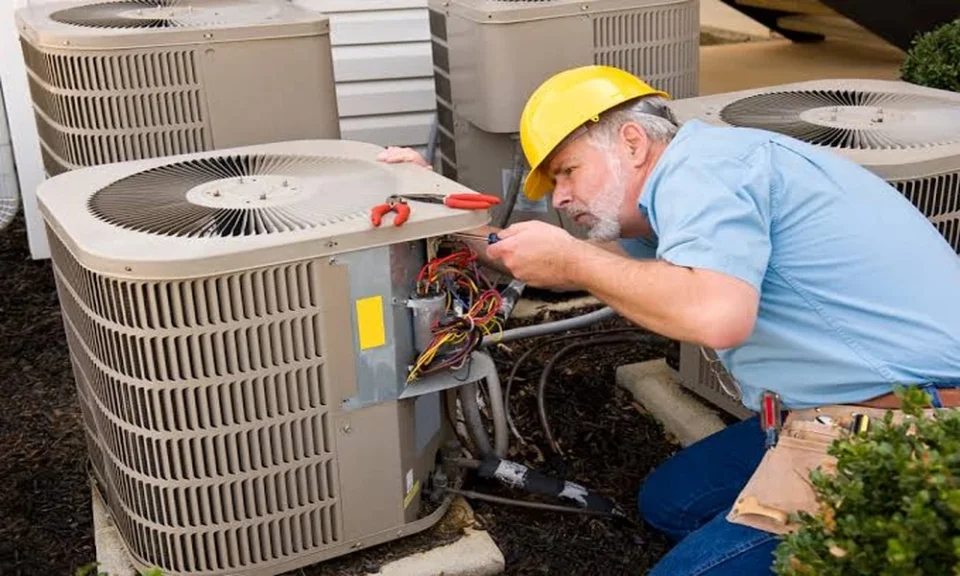
Furnaces rarely fail all at once. In most Calgary homes the end arrives gradually, with a repair one winter, a second the next, a room that never quite warms up, and a gas bill that seems higher than it used to be. Because each problem is manageable on its own, it is easy to keep repairing without stepping back to ask whether the furnace as a whole still makes sense. That step back is worth taking in the fall, when a decision can be made calmly rather than on the coldest night of the year.
Age Is the Starting Point
A well-maintained gas furnace in Canada typically lasts somewhere around 15 to 20 years, although some run longer and some, especially if they were oversized or rarely serviced, wear out sooner. The manufacturing date is printed on the rating plate inside the furnace door, and the serial number often encodes it too. Age alone is not a reason to replace a furnace that runs well, but a unit approaching twenty years deserves a closer look at every repair, since each one is being spent on equipment with a shorter future, and it is a sensible point to start reading about furnace replacement planning in Calgary even while the old unit still runs.
Calgary winters add to the wear. A furnace here runs for much of the year, and it also starts and stops a great deal during chinooks, when the weather swings from deep cold to mild and back. Older bungalows that still have their second or third furnace often show the pattern clearly, with the current unit having worked through a lot of heating seasons by the time it reaches its late teens.
The Heat Exchanger Question
The heat exchanger is the metal chamber that keeps combustion gases separate from the air moving through your house. Years of heating and cooling can eventually crack it, and a technician will look for cracks or holes with a camera, a mirror, or by watching how the flame behaves when the blower starts. A damaged heat exchanger is a safety concern, because combustion gases can reach the air in the house, so a technician who finds one will usually shut the furnace off and explain your options.
Heat exchanger replacement is possible, and it typically costs $1,500 to $3,500 or more depending on the model and whether any warranty coverage remains. On a furnace under ten years old with a valid parts warranty, the repair often makes sense. On a furnace past fifteen, that bill is worth weighing against what a new furnace costs installed in Calgary, and the comparison tends to tip toward replacement.
Repair Bills That Keep Coming
One repair in a winter is normal. Two or three in a season, or a different part failing each year, suggests the furnace is wearing out as a system rather than having a single bad component. Typical Calgary repair figures give a sense of how quickly this adds up: an igniter around $250 to $450, a control board $500 to $1,200, an inducer motor $600 to $1,200, and a blower motor $600 to $1,500. Two of those in the same year can reach a meaningful share of the cost of a new unit, and neither one makes the old furnace any younger.
Other Signs Worth Noticing
Uneven heat between floors, a house that feels dry and dusty, yellow or flickering burner flames instead of steady blue ones, and a furnace that runs almost constantly during a cold snap but still falls behind can all point toward an ageing system. So can a gas bill that has crept up over several winters with no change in how the house is used. None of these signs is conclusive alone, although together they make a strong case for getting a technician’s opinion on the furnace’s overall condition.
The Repair-Versus-Replace Arithmetic
A new gas furnace installed in Calgary typically costs somewhere between $5,000 and $8,000, depending on the model, the venting and the house. That figure is the benchmark every major repair should be measured against, and a simple calculation helps.
Start with the repair price, then estimate how many more years the furnace is likely to run once it is fixed. A $1,000 control board on an eight-year-old furnace buys perhaps seven to ten more years, which works out to roughly $100 to $150 per year of service, and that is clearly worth doing. The same $1,000 on an eighteen-year-old furnace might buy two or three years, which is closer to $330 to $500 per year, and it comes with a high chance that another part fails in the meantime. A heat exchanger at $2,500 on that older furnace is harder still to justify, because it can cost nearly half the price of a new unit.
The other side of the calculation is what a replacement brings. New furnaces from major manufacturers commonly carry a 10-year parts warranty when the equipment is registered, and installers often add their own labour warranty, so the first decade of repair risk largely shifts off the homeowner. Planning before a crisis also gives you time to compare quotes, ask about financing or current rebates, and choose a model that suits the house rather than whatever is in stock in January.
When Repair Is Still the Right Call
Replacement is not automatically the answer for an older furnace. A furnace in its mid-teens that has been maintained every year, has a sound heat exchanger and needs a single inexpensive part, such as a flame sensor typically priced around $200 to $350, is usually worth repairing. A good technician will say so plainly, and it is fair to ask them directly whether they would fix it or replace it if it were their own house. That question tends to produce a clearer answer than any formula.
Planning Ahead
If your furnace is past fifteen years, booking a fall maintenance visit and asking for an assessment of its condition gives you a baseline. You will learn whether the heat exchanger is sound, how the motors and controls look, and whether the technician expects trouble soon. With that information, you can budget for a replacement over the next year or two, or carry on with confidence, instead of making the decision with no heat and a technician waiting in the basement.
Calgary Air Heating and Cooling Ltd Contact Information
Address
Phone
+1 (403) 720-0003
Hours of operation
7 a.m. to 11 p.m. (including weekends)
